AI Creatives · Prompt Library
300 prompts. 19 fashion disciplines.
The complete Fashion AI School collection for designers, brands, marketers, photographers and students — searchable and ready to customise.
300 prompts
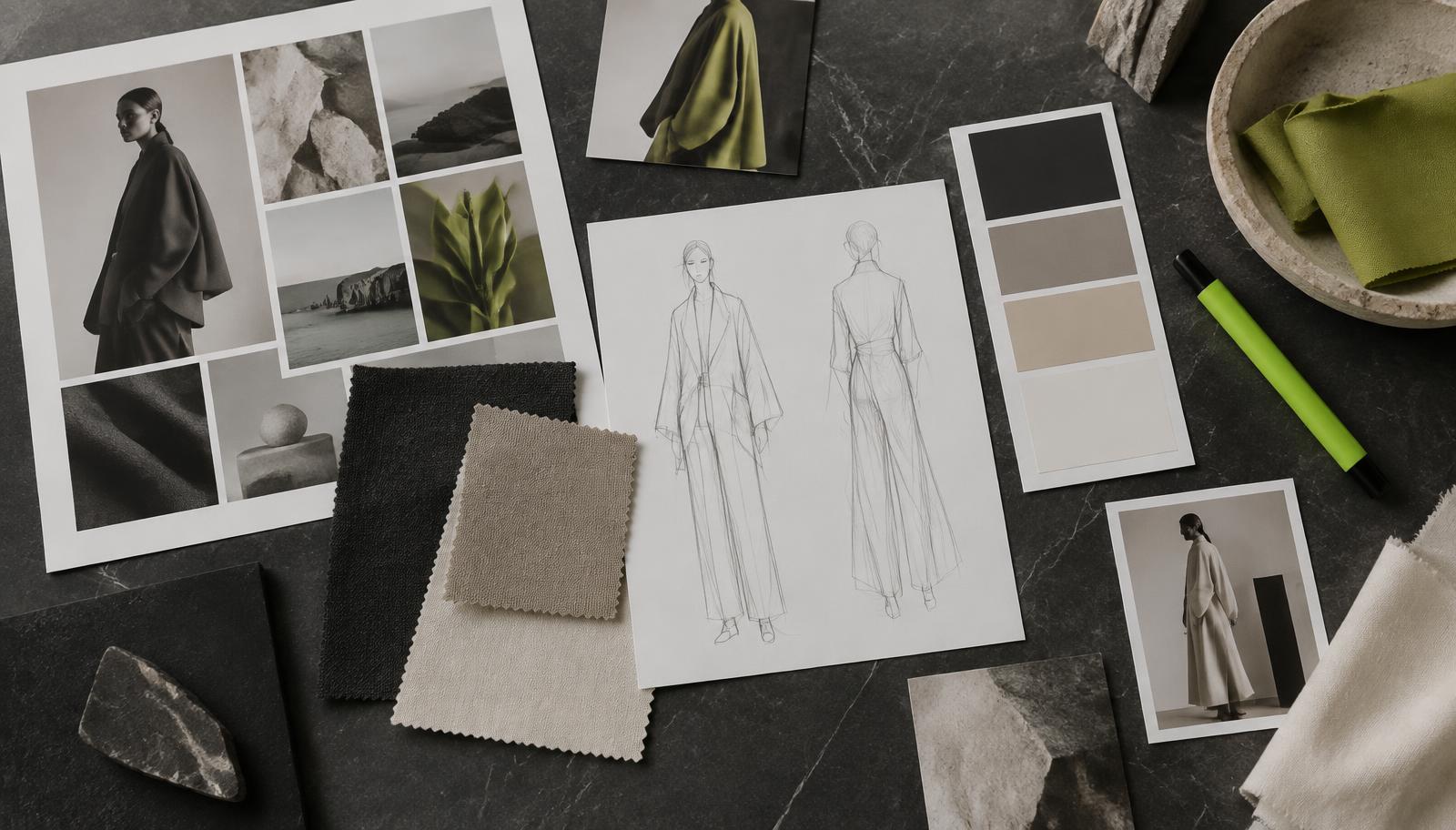
Capsule collection from one visual reference
Act as a fashion creative director. Develop a practical framework for capsule collection from one visual reference for [BRAND/COLLECTION] aimed at [CUSTOMER]. Specify silhouettes, materials, color, styling, commercial constraints and visual direction. Give concrete outputs the designer can use immediately, and avoid generic fashion clichés. Use placeholders such as [BRAND], [PRODUCT], [AUDIENCE], [MARKET] or [DATA] where the user should customize the workflow.
Open prompt →Abstract concept into a collection
Act as a fashion creative director. Develop a practical framework for abstract concept into a collection for [BRAND/COLLECTION] aimed at [CUSTOMER]. Specify silhouettes, materials, color, styling, commercial constraints and visual direction. Give concrete outputs the designer can use immediately, and avoid generic fashion clichés. Use placeholders such as [BRAND], [PRODUCT], [AUDIENCE], [MARKET] or [DATA] where the user should customize the workflow.
Open prompt →Three creative directions for one brief
Act as a fashion creative director. Develop a practical framework for three creative directions for one brief for [BRAND/COLLECTION] aimed at [CUSTOMER]. Specify silhouettes, materials, color, styling, commercial constraints and visual direction. Give concrete outputs the designer can use immediately, and avoid generic fashion clichés. Use placeholders such as [BRAND], [PRODUCT], [AUDIENCE], [MARKET] or [DATA] where the user should customize the workflow.
Open prompt →Signature silhouette system
Act as a fashion creative director. Develop a practical framework for signature silhouette system for [BRAND/COLLECTION] aimed at [CUSTOMER]. Specify silhouettes, materials, color, styling, commercial constraints and visual direction. Give concrete outputs the designer can use immediately, and avoid generic fashion clichés. Use placeholders such as [BRAND], [PRODUCT], [AUDIENCE], [MARKET] or [DATA] where the user should customize the workflow.
Open prompt →Collection built around one material
Act as a fashion creative director. Develop a practical framework for collection built around one material for [BRAND/COLLECTION] aimed at [CUSTOMER]. Specify silhouettes, materials, color, styling, commercial constraints and visual direction. Give concrete outputs the designer can use immediately, and avoid generic fashion clichés. Use placeholders such as [BRAND], [PRODUCT], [AUDIENCE], [MARKET] or [DATA] where the user should customize the workflow.
Open prompt →Collection color architecture
Act as a fashion creative director. Develop a practical framework for collection color architecture for [BRAND/COLLECTION] aimed at [CUSTOMER]. Specify silhouettes, materials, color, styling, commercial constraints and visual direction. Give concrete outputs the designer can use immediately, and avoid generic fashion clichés. Use placeholders such as [BRAND], [PRODUCT], [AUDIENCE], [MARKET] or [DATA] where the user should customize the workflow.
Open prompt →Cultural reference without copying
Act as a fashion creative director. Develop a practical framework for cultural reference without copying for [BRAND/COLLECTION] aimed at [CUSTOMER]. Specify silhouettes, materials, color, styling, commercial constraints and visual direction. Give concrete outputs the designer can use immediately, and avoid generic fashion clichés. Use placeholders such as [BRAND], [PRODUCT], [AUDIENCE], [MARKET] or [DATA] where the user should customize the workflow.
Open prompt →10-look collection with one design rule
Act as a fashion creative director. Develop a practical framework for 10-look collection with one design rule for [BRAND/COLLECTION] aimed at [CUSTOMER]. Specify silhouettes, materials, color, styling, commercial constraints and visual direction. Give concrete outputs the designer can use immediately, and avoid generic fashion clichés. Use placeholders such as [BRAND], [PRODUCT], [AUDIENCE], [MARKET] or [DATA] where the user should customize the workflow.
Open prompt →Collection narrative arc
Act as a fashion creative director. Develop a practical framework for collection narrative arc for [BRAND/COLLECTION] aimed at [CUSTOMER]. Specify silhouettes, materials, color, styling, commercial constraints and visual direction. Give concrete outputs the designer can use immediately, and avoid generic fashion clichés. Use placeholders such as [BRAND], [PRODUCT], [AUDIENCE], [MARKET] or [DATA] where the user should customize the workflow.
Open prompt →Unexpected garment details
Act as a fashion creative director. Develop a practical framework for unexpected garment details for [BRAND/COLLECTION] aimed at [CUSTOMER]. Specify silhouettes, materials, color, styling, commercial constraints and visual direction. Give concrete outputs the designer can use immediately, and avoid generic fashion clichés. Use placeholders such as [BRAND], [PRODUCT], [AUDIENCE], [MARKET] or [DATA] where the user should customize the workflow.
Open prompt →Trend translated into design language
Act as a fashion creative director. Develop a practical framework for trend translated into design language for [BRAND/COLLECTION] aimed at [CUSTOMER]. Specify silhouettes, materials, color, styling, commercial constraints and visual direction. Give concrete outputs the designer can use immediately, and avoid generic fashion clichés. Use placeholders such as [BRAND], [PRODUCT], [AUDIENCE], [MARKET] or [DATA] where the user should customize the workflow.
Open prompt →AI-assisted collection design brief
Act as a fashion creative director. Develop a practical framework for AI-assisted collection design brief for [BRAND/COLLECTION] aimed at [CUSTOMER]. Specify silhouettes, materials, color, styling, commercial constraints and visual direction. Give concrete outputs the designer can use immediately, and avoid generic fashion clichés. Use placeholders such as [BRAND], [PRODUCT], [AUDIENCE], [MARKET] or [DATA] where the user should customize the workflow.
Open prompt →Collection for a specific customer moment
Act as a fashion creative director. Develop a practical framework for collection for a specific customer moment for [BRAND/COLLECTION] aimed at [CUSTOMER]. Specify silhouettes, materials, color, styling, commercial constraints and visual direction. Give concrete outputs the designer can use immediately, and avoid generic fashion clichés. Use placeholders such as [BRAND], [PRODUCT], [AUDIENCE], [MARKET] or [DATA] where the user should customize the workflow.
Open prompt →High-low design combinations
Act as a fashion creative director. Develop a practical framework for high-low design combinations for [BRAND/COLLECTION] aimed at [CUSTOMER]. Specify silhouettes, materials, color, styling, commercial constraints and visual direction. Give concrete outputs the designer can use immediately, and avoid generic fashion clichés. Use placeholders such as [BRAND], [PRODUCT], [AUDIENCE], [MARKET] or [DATA] where the user should customize the workflow.
Open prompt →Fashion concept critique and improvement
Act as a fashion creative director. Develop a practical framework for fashion concept critique and improvement for [BRAND/COLLECTION] aimed at [CUSTOMER]. Specify silhouettes, materials, color, styling, commercial constraints and visual direction. Give concrete outputs the designer can use immediately, and avoid generic fashion clichés. Use placeholders such as [BRAND], [PRODUCT], [AUDIENCE], [MARKET] or [DATA] where the user should customize the workflow.
Open prompt →12-month trend radar
Act as a fashion trend strategist. Build a research framework for 12-month trend radar focused on [MARKET/CATEGORY] and [SEASON/YEAR]. Separate observed signals from interpretation, identify what evidence should be checked, and finish with product, content and timing implications. Use placeholders such as [BRAND], [PRODUCT], [AUDIENCE], [MARKET] or [DATA] where the user should customize the workflow.
Open prompt →Weak signals before they become trends
Act as a fashion trend strategist. Build a research framework for weak signals before they become trends focused on [MARKET/CATEGORY] and [SEASON/YEAR]. Separate observed signals from interpretation, identify what evidence should be checked, and finish with product, content and timing implications. Use placeholders such as [BRAND], [PRODUCT], [AUDIENCE], [MARKET] or [DATA] where the user should customize the workflow.
Open prompt →Trend signals into product opportunities
Act as a fashion trend strategist. Build a research framework for trend signals into product opportunities focused on [MARKET/CATEGORY] and [SEASON/YEAR]. Separate observed signals from interpretation, identify what evidence should be checked, and finish with product, content and timing implications. Use placeholders such as [BRAND], [PRODUCT], [AUDIENCE], [MARKET] or [DATA] where the user should customize the workflow.
Open prompt →Trend versus hype filter
Act as a fashion trend strategist. Build a research framework for trend versus hype filter focused on [MARKET/CATEGORY] and [SEASON/YEAR]. Separate observed signals from interpretation, identify what evidence should be checked, and finish with product, content and timing implications. Use placeholders such as [BRAND], [PRODUCT], [AUDIENCE], [MARKET] or [DATA] where the user should customize the workflow.
Open prompt →Seasonal color forecast
Act as a fashion trend strategist. Build a research framework for seasonal color forecast focused on [MARKET/CATEGORY] and [SEASON/YEAR]. Separate observed signals from interpretation, identify what evidence should be checked, and finish with product, content and timing implications. Use placeholders such as [BRAND], [PRODUCT], [AUDIENCE], [MARKET] or [DATA] where the user should customize the workflow.
Open prompt →Future silhouette forecast
Act as a fashion trend strategist. Build a research framework for future silhouette forecast focused on [MARKET/CATEGORY] and [SEASON/YEAR]. Separate observed signals from interpretation, identify what evidence should be checked, and finish with product, content and timing implications. Use placeholders such as [BRAND], [PRODUCT], [AUDIENCE], [MARKET] or [DATA] where the user should customize the workflow.
Open prompt →Competitor trend positioning
Act as a fashion trend strategist. Build a research framework for competitor trend positioning focused on [MARKET/CATEGORY] and [SEASON/YEAR]. Separate observed signals from interpretation, identify what evidence should be checked, and finish with product, content and timing implications. Use placeholders such as [BRAND], [PRODUCT], [AUDIENCE], [MARKET] or [DATA] where the user should customize the workflow.
Open prompt →Trend research interview guide
Act as a fashion trend strategist. Build a research framework for trend research interview guide focused on [MARKET/CATEGORY] and [SEASON/YEAR]. Separate observed signals from interpretation, identify what evidence should be checked, and finish with product, content and timing implications. Use placeholders such as [BRAND], [PRODUCT], [AUDIENCE], [MARKET] or [DATA] where the user should customize the workflow.
Open prompt →Trend adoption by customer type
Act as a fashion trend strategist. Build a research framework for trend adoption by customer type focused on [MARKET/CATEGORY] and [SEASON/YEAR]. Separate observed signals from interpretation, identify what evidence should be checked, and finish with product, content and timing implications. Use placeholders such as [BRAND], [PRODUCT], [AUDIENCE], [MARKET] or [DATA] where the user should customize the workflow.
Open prompt →